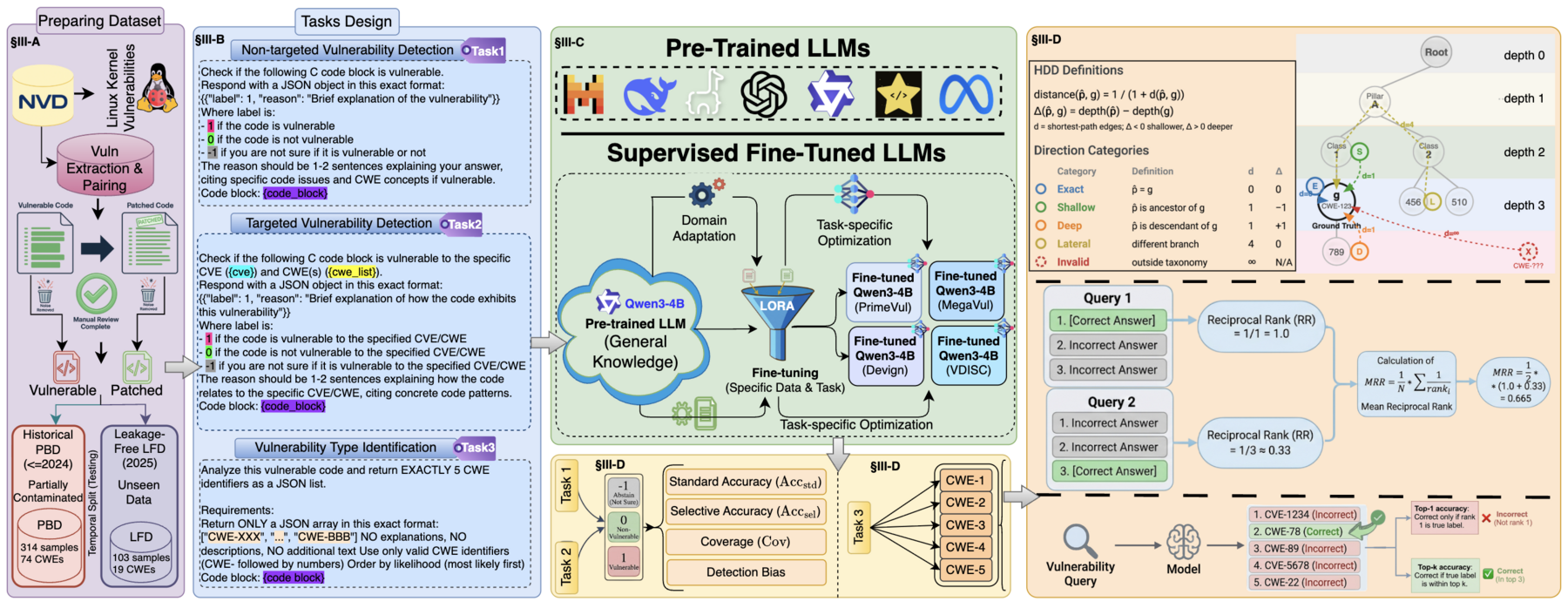
CWE-Trace — Calibration Without Comprehension
834 curated Linux kernel samples, 74 CWEs, and a temporal split diagnose whether fine-tuned LLMs genuinely reason about vulnerabilities, or just recalibrate.
A field map of active and in-progress work, organized by the four research vectors that drive the lab: LLMs, autonomous agents, verification & reward design, and program analysis & AI safety.
Probing how large language models reason about code, exploits, and patches, from zero-shot detection to chain-of-thought patch synthesis and reproducible benchmark design.
834 curated Linux kernel samples, 74 CWEs, and a temporal split diagnose whether fine-tuned LLMs genuinely reason about vulnerabilities, or just recalibrate.

Investigates chain-of-thought reasoning patterns that improve zero-shot CWE coverage on real-world C/C++ code.
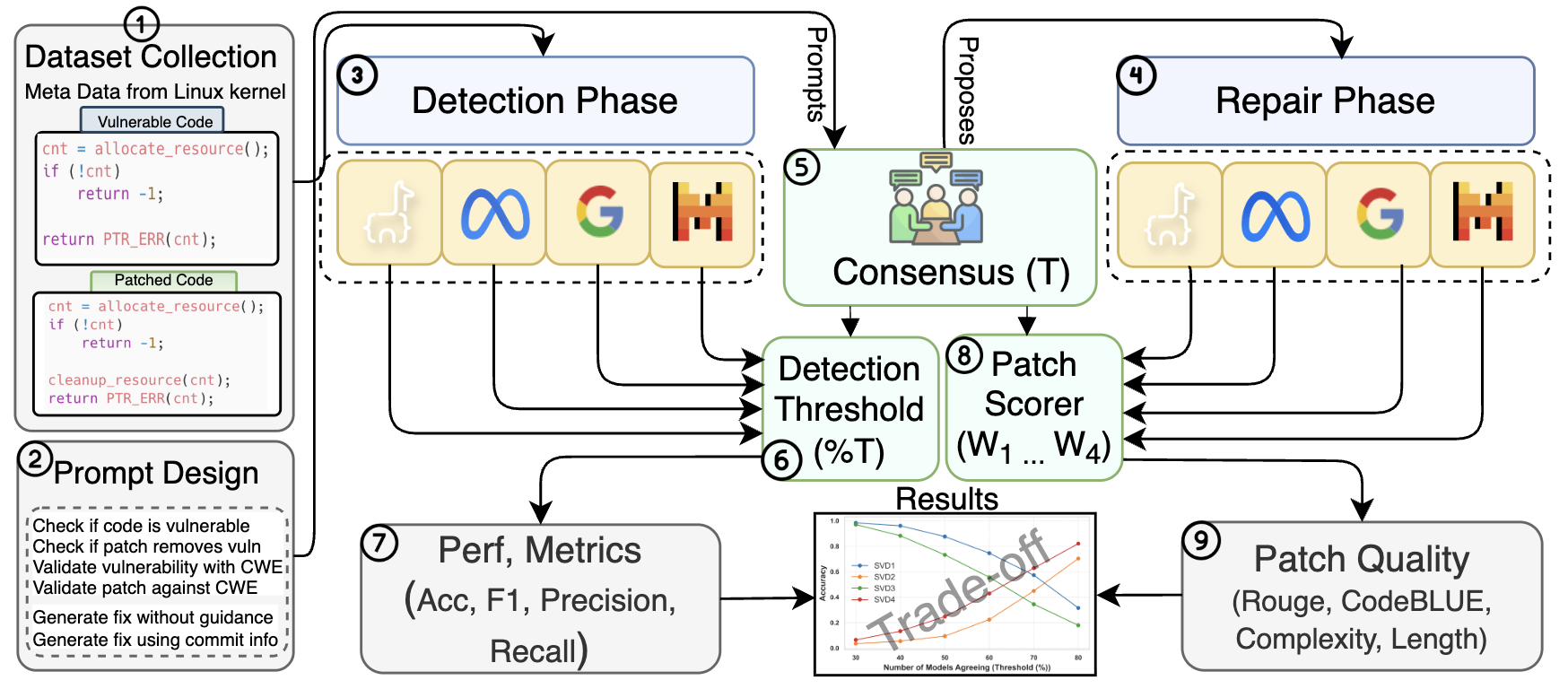
A head-to-head comparison of diverse LLMs on detecting and fixing vulnerabilities, uncovering capability gaps between families.
Agent loops that read, instrument, and probe codebases. They plan experiments, execute tools (static analysis, fuzzing harnesses, dynamic tracing), and proposing exploit hypotheses without human prompting.
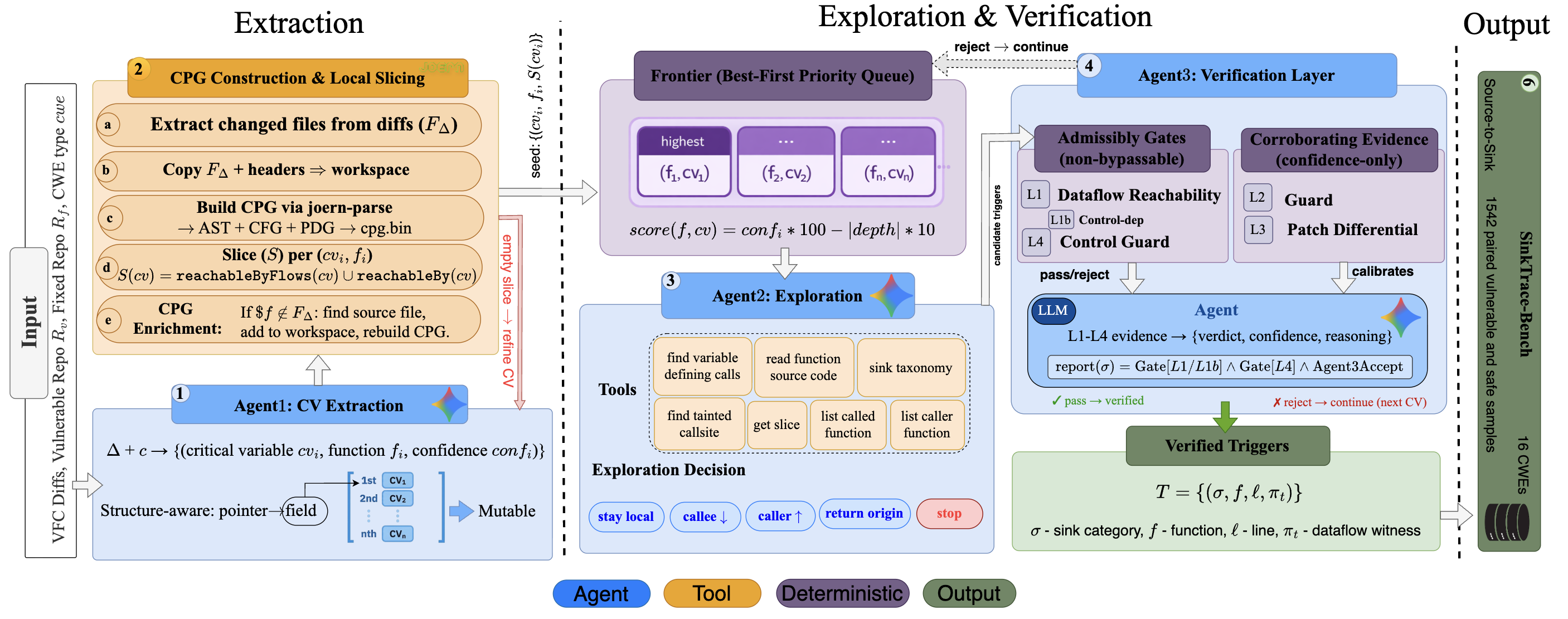
LLM agents explore the code property graph while deterministic gates verify every trigger. 75.0% exact-statement localization on InterPVD, plus SinkTrace-Bench: 1,542 causal source-to-sink samples.
Goal-directed tool use over real repositories: build, instrument, hypothesize, verify. Drafts in progress, follow this space.
Training against verifiable rewards works when checking is free and exact. Security breaks that: sanitizers only see bugs that crash, and a model asked to grade another model can be talked into agreeing with a confident wrong answer. This line of work studies what sits in between.
Three ways to check a security claim: run the code, ask another model, or demand a real dependency path through the program graph. Measuring what each one can cover, and how often each can be fooled when a model optimizes against it.
Static and dynamic analysis married to neural models: benchmarks, datasets, and adversarial stress tests that ground evaluation in real CVEs, with safety-conscious deployment in mind.

A reproducible evaluation framework that grounds LLM claims in real CWE-tagged code and measurable patch outcomes.

Mapping the threat landscape, defenses, and open problems across cyber-physical power systems.